
Communicating in Divisive Times
Opening the door to conversation and understanding

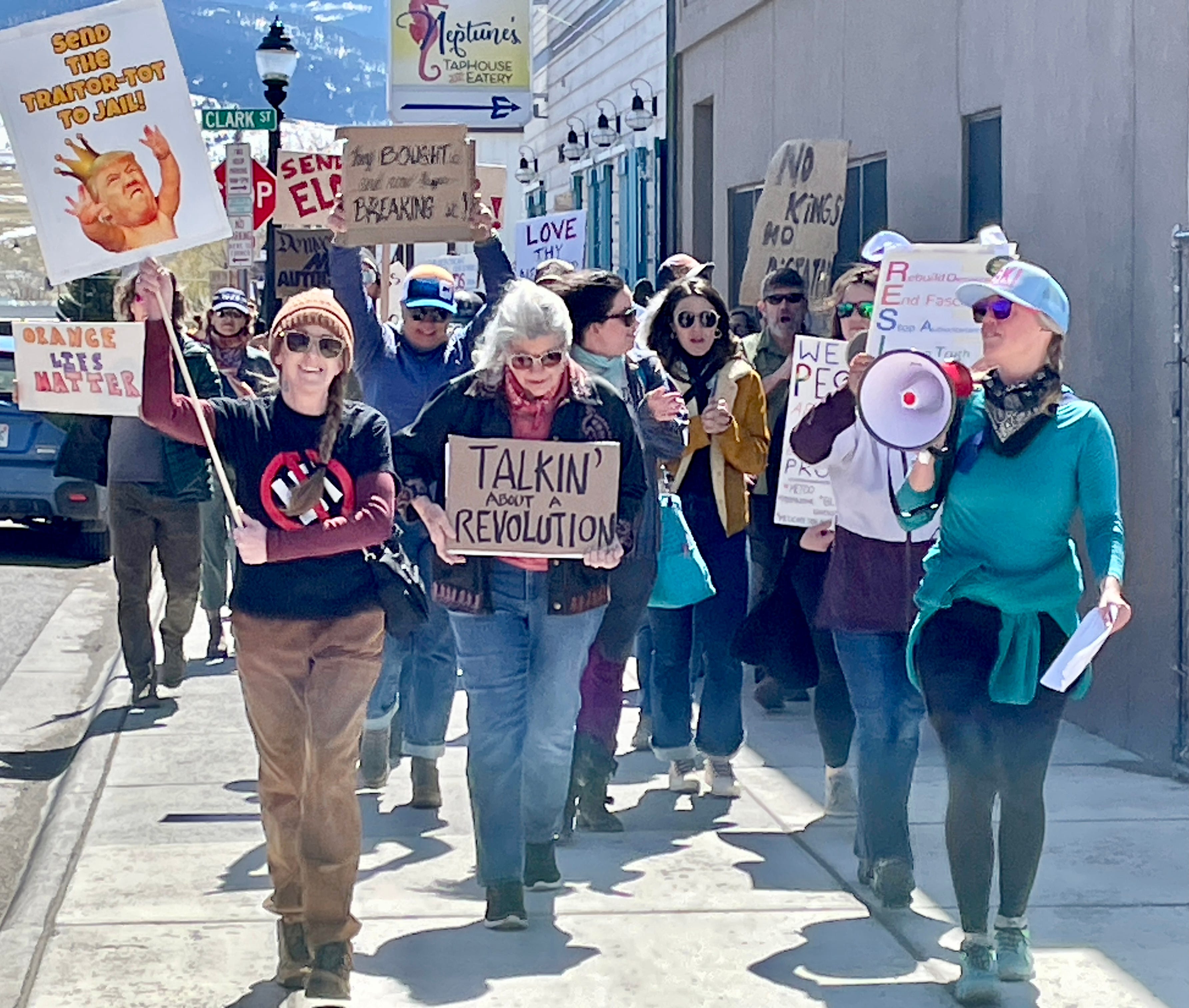
(Note from Rick. Mary and I are two of the co-founders of Indivisible Park County, a chapter of Indivisible, the national organization. Our chapter’s mission is to protect our community, our constitution, and our democracy. Each week, Mary produces a Weekly Digest that we hope keeps our members informed and motivated. A group of our volunteers, called “Message Makers,” provides a piece each week on how to communicate about difficult and divisive subjects. They do an excellent job. This week’s message, I think, is relevant for all of us on our protesting journeys. I’ve posted it below. Let me know what you think.)
The recent NO KINGS DAY 2 events on October 18 were both celebrating our
democracy and protesting one person ruling our country. There have been a
number of comments made by politicians and others who say protesting is “un-American” and “unpatriotic.” Here are some suggestions for talking with people in person and in written communications.
When someone says:
“You must hate America if you protested at No Kings.”
You could say:
“Actually, I protested because I love America. What I’m worried about is our country not living up to the promise of freedom and fairness.”
“The No Kings event wasn’t about hating America - it was about defending American democracy and values.”
“I don’t hate America. I care enough about America to speak up when I feel she’s being challenged and in trouble.”
When someone says:
“You’re tearing the country apart and are anti-patriotic.”
You could say:
“I don’t want to tear it down - I want to make it stronger. I believe we can do better together.”
“For me, it was patriotic. Standing up for democracy is what keeps us united.”
When someone says:
“Why can’t you just support the president?”
You could say:
“Supporting America and supporting one person aren’t the same thing. Presidents come and go, but our democracy belongs to all of us.”
“I’ll always support our country and our Constitution. I will support our president when he or she also supports our country and the Constitution and respects institutions and citizens.”
“I get where you’re coming from in wanting strong leadership, wanting America to be safe and respected. I share that.”
Why this matters:
These conversations matter because the divide isn’t just about political parties. It’s about how we see America’s future and the kinds of values we want to uphold: love of country, fairness, freedom, and the belief that democracy belongs to all of us.
When we respond: “I love America,” we create space for connection. We remind others that we respect them, that we value the shared ground, and that we are inviting them into a conversation, not shutting them out.
The goal isn’t to win an argument, but to keep the door open for conversation and understanding: “We may not agree on everything, but I think we both care deeply about our country. That’s a good place to start.”
PS - If you found this post helpful, please consider restacking it or sharing it.
Thanks for reading A Protesting Journey! Subscribe for free to receive new posts.
Who is Rick Lamplugh?
I’m a writer of award-winning nonfiction books. I combine research with storytelling. Two of my last three books covered wolves and Yellowstone National Park. I actively advocated for wildlife and wild lands for a decade. I’m now advocating—with my wife, Mary, and so many others—for our democracy.
I’m also currently researching and writing on a new topic—my journey into the wilds of cancer.
To read preview chapters from my forthcoming book, The Wilds of Cancer: A Life-Changing and Life-Affirming Journey
Good advice!